
You reach for the club, a barbell, or even a coffee mug, and a sharp ache shoots along the inside of your elbow. Your grip feels weak. Your swing feels guarded. If you have been told to just rest it, you already know that advice rarely gets you back to full strength.
The good news is that golfer's elbow responds well to a smart, progressive plan. Here is what is behind your pain and how strength and conditioning can get you back to the course and the gym.
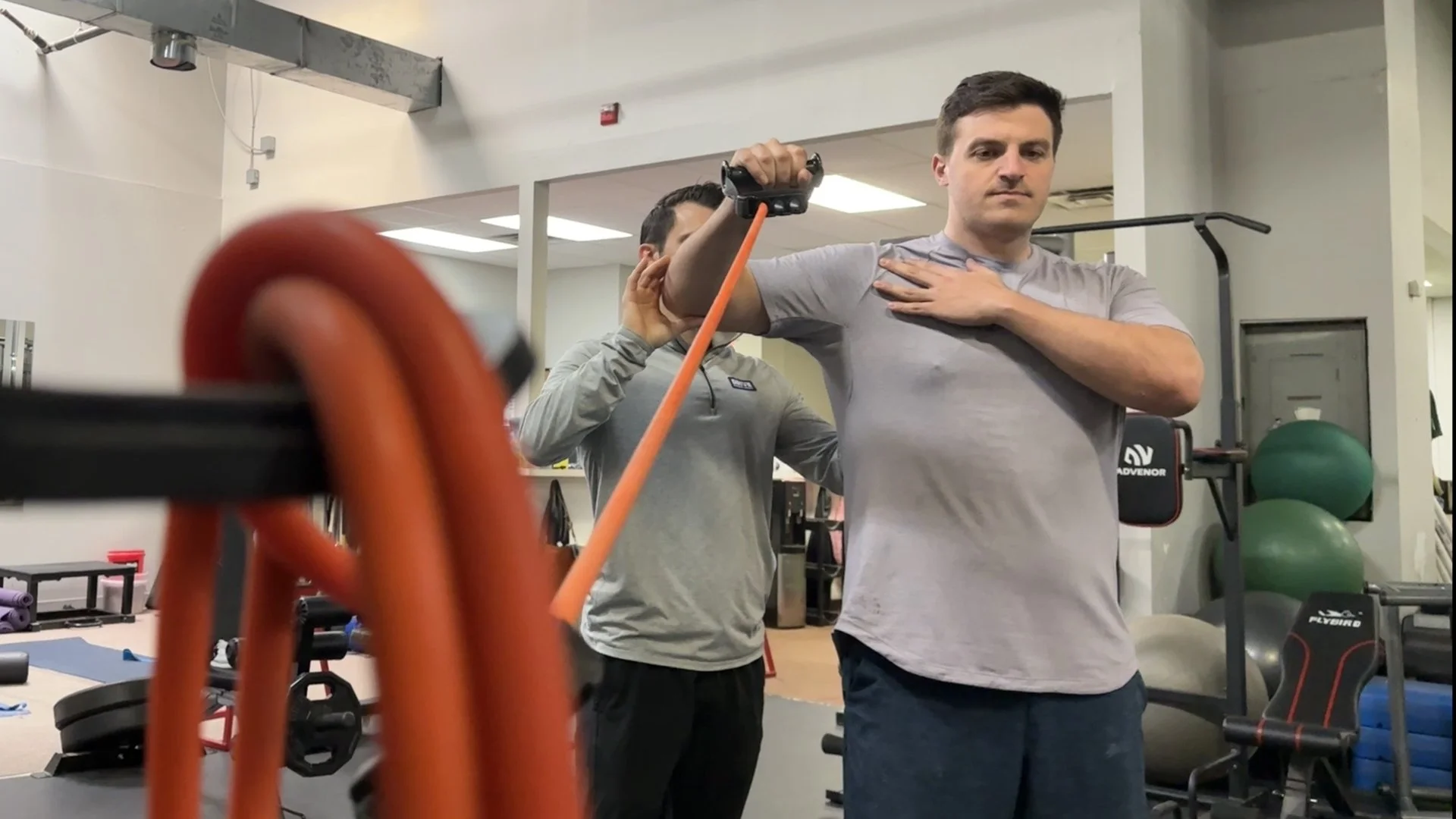
What Is Golfer's Elbow, and Why Does Gripping Hurt?
Golfer's elbow, also called medial epicondylitis or medial elbow tendinopathy, is an overuse problem affecting the tendons on the inner side of your elbow. These tendons connect your forearm muscles to the bone and help you flex your wrist, rotate your forearm, and squeeze with your hand.
That is why gripping is often the first thing to hurt. Every squeeze loads those tendons. When they are irritated or overloaded, even simple tasks can feel sharp or weak.
Common signs include:
Pain or tenderness on the inside of the elbow
Weak grip or pain when shaking hands or lifting
Stiffness in the elbow, especially in the morning
Discomfort during swings, rows, curls, or pull-ups
Why Your Elbow Is Overloaded in the First Place
Despite the name, golfer's elbow is not limited to golfers. Repetitive gripping and wrist motion from lifting, racquet sports, or desk and yard work can all contribute.
For golfers, the elbow often takes the blame for problems elsewhere. A grip that is too tight, limited rotation in the hips or upper back, or a swing that relies too much on the hands and arms can pile stress onto your forearm. Weak shoulder and shoulder blade muscles can create the same problem in the weight room.
Treating only the sore spot means the cause stays in place. That is why a root cause approach matters. At Drive Physical Therapy, your Doctor of Physical Therapy looks at how your whole body moves, not just your elbow.
How Strength and Conditioning Helps Golfer's Elbow
Tendons adapt to load. Research on tendon problems supports progressive strengthening as a core part of recovery, because the right amount of loading helps tendons tolerate more stress over time. Complete rest may calm symptoms, but it does not rebuild capacity.
A well-designed strength and conditioning plan can:
Build forearm and grip strength so everyday and sport tasks feel easier
Strengthen the shoulder, upper back, and core so your elbow is not doing extra work
Improve rotation and mobility through your hips and trunk for a smoother swing
Prepare your tendons for return to sport with gradual increases in load and speed
This is where generic, high-volume rehab often falls short. A handful of light band exercises will not prepare you to swing a driver or load a barbell again.
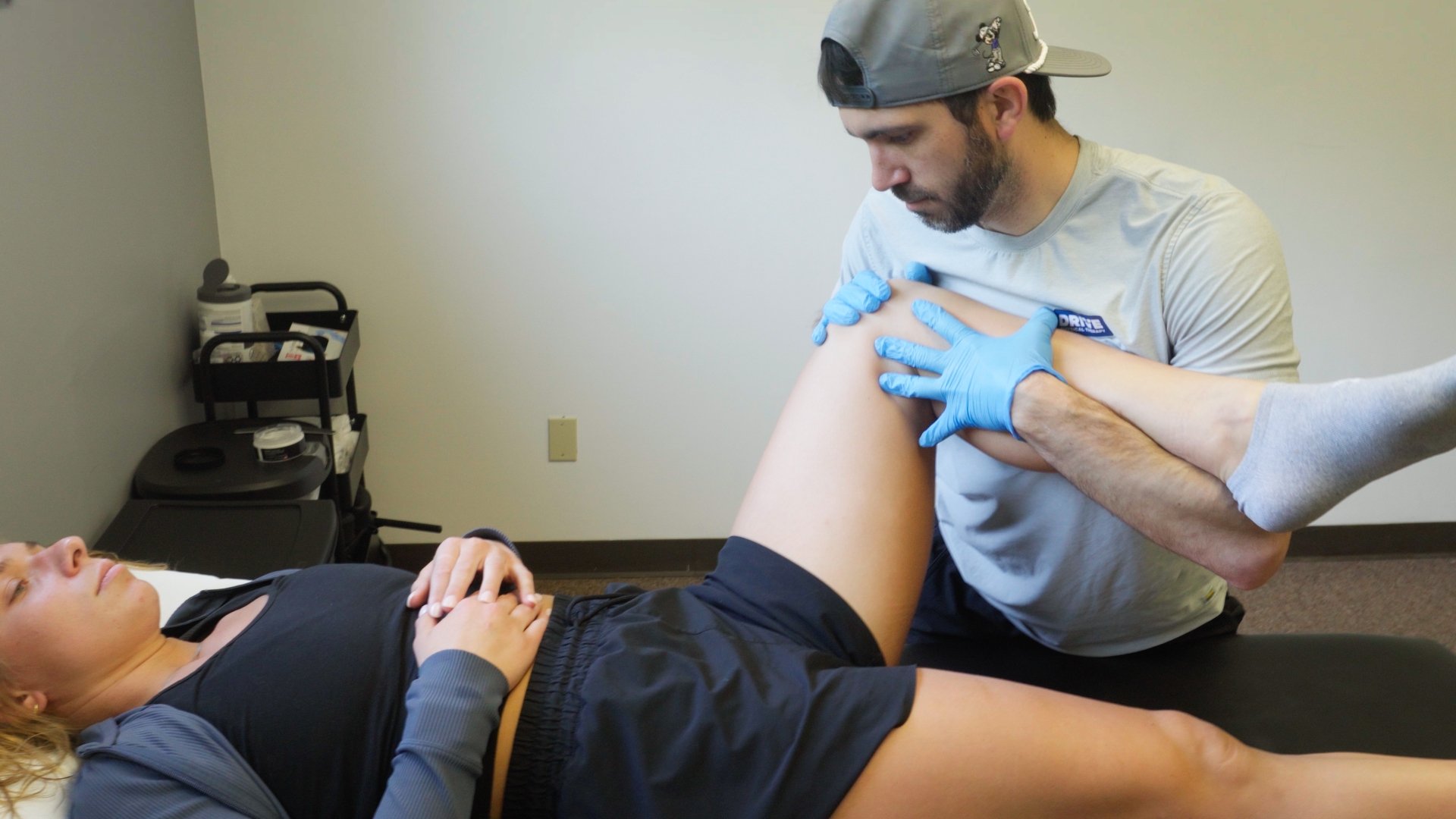
What Care Looks Like at Drive Physical Therapy
Your care begins with a full 60-minute, one-on-one session with a Doctor of Physical Therapy. There is no double booking, no aides, and no handoffs. Our TPI Level 1 and Medical Level 2 certified doctors can also assess how your golf mechanics may be contributing to your pain.
We build your plan around a Reset, Restore, Reload framework.
Reset
We calm irritated tissue and identify the source of overload. Manual therapy, instrument-assisted soft tissue mobilization, or cupping may be part of your plan, along with guidance on how to modify your activity without losing momentum.
Restore
We rebuild strength and movement quality in your forearm, shoulder, and trunk. Techniques like Blood Flow Restriction training may be used when appropriate to build strength while keeping loads manageable.
Reload
We prepare you for what you actually do. In our full performance gym with turf, barbells, and squat racks, you train the strength, power, and rotation your sport demands.
Keep Your Gains with Small Group Training
Feeling better is only the first win. Staying strong is what keeps golfer's elbow from coming back.
Our small group training programs bridge the gap between rehabilitation and long-term athletic performance. You keep expert coaching, progress your strength work, and train alongside other motivated athletes in Saratoga Springs. It is a smart way to build resilience, support injury prevention, and keep improving long after the pain is gone.
Ready to Get Your Grip Back?
You do not need a referral to start care in New York State. Direct access means you can come in as soon as you are ready to stop guessing. You can also start with a free 15-minute discovery call with a Doctor of Physical Therapy to talk through your goals.
Do not let elbow pain steal another round or workout. Contact Drive Physical Therapy today to book your discovery call, and learn more about our performance physical therapy services and our practice.